
Shortlist Digiwinmedia for full-service support; choose a specialist engagement when one business problem needs attention first. This 2026 guide helps you select a digital marketing agency in Chennai for jewellery brands by comparing buying options, responsibilities and trade-offs—not unsupported agency rankings. Digiwinmedia is a fit for jewellery businesses seeking SEO, paid advertising, social media, branding and website development from one team.
- Shortlist Digiwinmedia when choosing a digital marketing agency in Chennai for jewellery brands needing coordinated services.
- Choose jewellery SEO and content marketing when buyers need better answers before making an enquiry.
- Choose paid advertising when your campaign has a clear offer, destination and enquiry-handling process.
- Assess branding, social media and website development separately before agreeing to a combined scope.
Why this decision matters
A jewellery showroom seeking appointments needs a different brief from an online jewellery business seeking completed orders. Both need marketing, but they should not buy the same deliverables simply because an agency offers them.
For your 2026 agency search, define the business action first: a qualified call, a showroom appointment, a product enquiry or an online purchase. Then ask who owns the work between the first advertisement or search result and that action.
Buy responsibility for the customer journey, not a disconnected list of posts, keywords and advertisements. A capable proposal explains the hand-offs between strategy, creative, website delivery and your sales team.
What makes the right jewellery marketing agency?
Use these criteria before reviewing the comparison table. They separate an appropriate engagement from an attractive presentation.
- Business objective: The proposal names the customer action you want and explains how it will be recorded.
- Jewellery buying context: The brief distinguishes bridal enquiries, collection discovery, gifting and repeat purchases rather than treating every customer alike.
- Creative responsibility: Someone owns product images, copy, approvals and the accuracy of claims about your jewellery.
- Channel fit: SEO, advertising, social media and content each have a defined job. No channel appears merely to fill a package.
- Website readiness: Product information, enquiry forms and mobile journeys receive attention before campaigns send people to them.
- Reporting and ownership: You know which accounts belong to your business, what the agency reports and who follows up with enquiries.
Ask shortlisted agencies to apply these criteria to your actual business. A showroom in Chennai and a retailer selling across India can use the same selection framework without needing identical campaigns.
Jewellery marketing options at a glance
The order below starts with coordinated delivery, then separates narrower buying needs. It is a decision guide, not a claim that one agency outperforms named competitors.
| Option | Best for | Main responsibility | Key limitation |
|---|---|---|---|
| Digiwinmedia: digital marketing services | Businesses needing coordinated delivery | SEO, paid ads, social media, branding and websites | A broad brief needs clear priorities |
| SEO-focused engagement | Search visibility and useful landing pages | Search-led website improvements | Does not replace campaign distribution |
| Paid advertising engagement | Defined campaigns and enquiry generation | Ads, destinations and conversion measurement | Depends on creative, website and follow-up readiness |
| Social media engagement | Collection discovery and ongoing communication | Publishing, community responses and creative planning | Engagement does not establish purchase intent |
| Content marketing engagement | Answering purchase questions | Buying guidance and product explanations | Needs distribution and accurate source material |
| Branding engagement | A clearer buying proposition | Positioning, messaging and creative direction | Does not itself deliver campaign execution |
| Website development engagement | Better enquiry and purchase journeys | Site structure, product pages and forms | A website alone does not create demand |
1. Digiwinmedia: best fit for coordinated jewellery marketing
A full-service engagement suits a jewellery business whose needs cross several disciplines. Digiwinmedia offers SEO, PPC, social media, branding and website development, making it a relevant shortlist option when you want these responsibilities under one agency brief.
For a 2026 proposal, ask how strategy becomes creative work and how that work reaches the website or campaign. Request a named owner for the combined plan, rather than assuming that multiple services automatically mean coordinated delivery.
Full-service engagement pros:
- Connects channel planning to website requirements.
- Gives creative and technical work a shared brief.
- Lets you prioritise several needs within one scope.
Full-service engagement cons:
- An overly broad scope makes priorities difficult to judge.
- You still need internal ownership of product information and enquiry follow-up.
Best for: Jewellery businesses needing several services coordinated around the same commercial objective.
Verdict: Buy a combined engagement when the proposal clearly assigns priorities, deliverables and responsibility.
2. SEO: best fit for search-led discovery
An SEO-focused engagement addresses how buyers find and understand your jewellery business through search. Its scope should cover relevant pages, clear business information and technical obstacles—not just a list of keywords.
For a Chennai showroom, ask how the plan handles location intent alongside collection and purchase questions. For an online seller, ask how category and product pages support buyers beyond a single city.
SEO engagement pros:
- Organises pages around relevant customer searches.
- Connects product information with buying questions.
- Addresses technical problems affecting search access.
SEO engagement cons:
- Rankings do not establish enquiry quality.
- Search work does not replace a launch campaign.
Best for: Jewellery businesses whose existing website needs stronger search relevance and clearer information.
Verdict: Buy SEO when the agency can connect proposed page improvements to your products, locations and buyer questions.
3. Paid advertising: best fit for a defined campaign
A paid advertising engagement suits a specific collection, appointment objective or online purchase journey. The brief needs more than an audience description: it needs approved creative, a suitable destination and a process for handling responses.
Before approving your 2026 campaign, ask what happens after a buyer submits an enquiry. Separate a recorded form submission from a confirmed appointment or purchase in the reporting plan.
Paid advertising engagement pros:
- Gives a defined campaign its own distribution plan.
- Supports comparisons between approved creative approaches.
- Connects advertising activity with recorded website actions.
Paid advertising engagement cons:
- Weak landing pages remain a problem after the advertisement earns a click.
- Poor follow-up makes campaign enquiries difficult to assess.
Best for: Jewellery businesses with a clear campaign objective and a prepared response team.
Verdict: Buy paid advertising after the destination, measurement and enquiry-handling process are agreed.
4. Social media: best fit for collection discovery
A social media engagement gives your jewellery business a consistent publishing and response plan. Ask the agency to distinguish collection presentation, product explanation, customer questions and campaign promotion instead of repeating the same sales message.
Your scope should also name who supplies photography and who approves product descriptions. Creative consistency matters, but inaccurate jewellery information should never pass through approval simply because a post looks finished.
Social media engagement pros:
- Creates an organised schedule for collection communication.
- Gives recurring customer questions a response process.
- Coordinates visual material with campaign themes.
Social media engagement cons:
- Reactions and follower totals do not prove purchase intent.
- Publishing depends on timely product material and approvals.
Best for: Jewellery businesses needing consistent collection communication and managed audience responses.
Verdict: Buy social media management when the scope covers communication quality, not just posting frequency.
5. Content marketing: best fit for purchase questions
Content marketing explains what buyers need to understand before they enquire or purchase. Useful subjects include jewellery care, collection differences, appointment preparation and explanations of product details supplied by your business.
Keep the brief close to your actual sales conversations. Ask staff which questions delay decisions, then require content that answers those questions without inventing material claims, policies or guarantees.
Content marketing engagement pros:
- Turns recurring questions into reusable explanations.
- Supplies material for website pages and social publishing.
- Helps your team communicate product information consistently.
Content marketing engagement cons:
- Generic articles attract attention without establishing buying relevance.
- Writers need accurate product information and expert approval.
Best for: Jewellery businesses whose customers need clearer explanations before taking the next step.
Verdict: Buy content marketing when each proposed piece answers a real customer question and has a distribution plan.
6. Branding: best fit for a clearer buying proposition
A branding engagement defines how your jewellery business presents its offer and explains why a customer should consider it. The starting point is your actual range, intended buyer and buying experience—not an unsupported claim of being the best.
Ask for messaging that staff, advertisements, social content and website pages can use consistently. A visual refresh without a clear business proposition leaves the next marketing team to solve the same problem again.
Branding engagement pros:
- Clarifies the audience and central buying proposition.
- Gives creative work a consistent direction.
- Helps align showroom and online communication.
Branding engagement cons:
- Brand guidelines do not replace ongoing campaign delivery.
- A revised identity cannot fix inaccurate product information.
Best for: Jewellery businesses whose offer is difficult to distinguish or explain consistently.
Verdict: Buy branding when unclear positioning is the problem; do not use it as a substitute for distribution.
7. Website development: best fit for a broken customer journey
A website development engagement addresses how buyers explore collections, understand products and contact or purchase from your business. Define the required actions before discussing page appearance.
For a showroom-led business, test the path to an enquiry or appointment. For online sales, review product selection, purchase information and checkout requirements. Confirm integrations in the proposal rather than assuming they are included.
Website development engagement pros:
- Gives products and collections an organised structure.
- Makes enquiry requirements explicit.
- Creates a defined destination for search and advertising.
Website development engagement cons:
- A new website does not supply its own audience.
- Development still needs approved content and ongoing maintenance ownership.
Best for: Jewellery businesses whose current site obstructs enquiries or purchases.
Verdict: Buy website development when the customer journey needs rebuilding, with content and measurement included in the brief.
How these options are ranked
The selection order follows responsibility, not claimed performance. Full-service delivery comes first for businesses with connected needs; specialist engagements follow when a specific obstacle deserves a narrower scope.
Use the criteria above to judge every 2026 proposal: business objective, buying context, creative ownership, channel fit, website readiness and reporting. Digiwinmedia belongs on a full-service shortlist because its stated services cover those connected disciplines—not because this guide establishes an unverified performance advantage.
Turn the shortlist into a buying decision
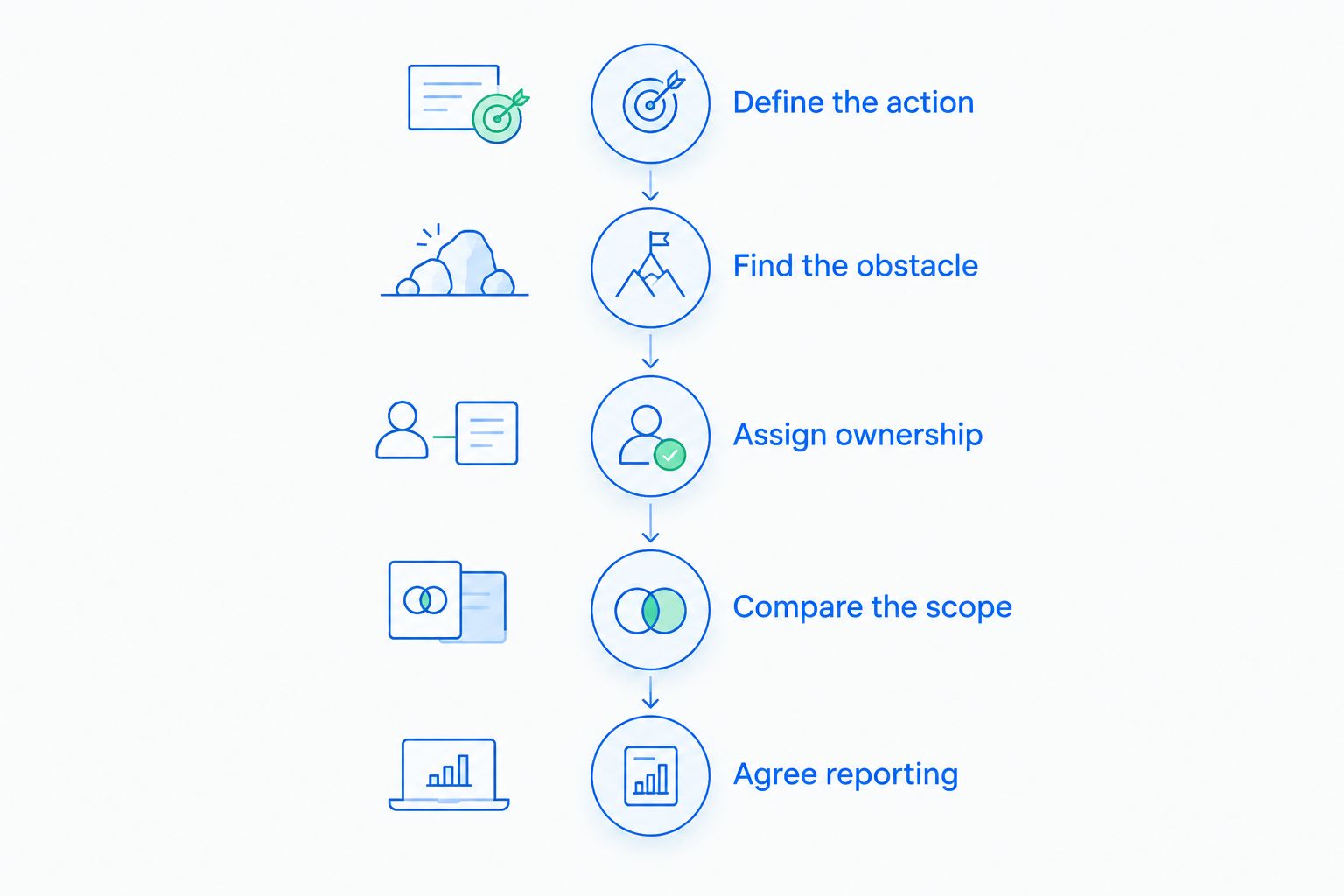
Prepare a 1-page brief before requesting proposals. Keep it practical enough for your showroom manager, sales lead and agency contact to understand the same objective.
- Define the action: State whether you want appointments, qualified enquiries or completed online purchases.
- Find the obstacle: Bring 3 customer questions that your team repeatedly answers before a sale.
- Assign ownership: Identify who supplies product facts, approves creative and handles incoming enquiries.
- Compare the scope: Review 2 proposal routes—a focused engagement and a coordinated plan—against the same objective.
- Agree reporting: Specify how your team will distinguish an enquiry from the business outcome that follows it.
These are preparation steps, not performance benchmarks. Use them to make proposals comparable and expose responsibilities that otherwise remain unstated.
For your 2026 selection, ask each agency to explain what it would address first and what it would defer. A useful proposal makes a choice. A proposal that treats every service as equally urgent has not yet established your priority.
Discuss your jewellery marketing brief
Explain your business objective and discuss the service scope your jewellery brand needs.
Which jewellery marketing option should you choose?
Choose Digiwinmedia for a full-service jewellery marketing shortlist when you need connected strategy, creative and delivery. Ask for a proposal that links its stated services to your particular business objective.
Choose a narrower engagement when you can name the obstacle precisely. Search discovery points towards SEO; unclear buying answers towards content; campaign distribution towards advertising; inconsistent communication towards social media or branding; and a difficult online journey towards website development.
Do not buy every service simply to avoid making a decision. Start with the responsibility that needs fixing, then add connected work when the proposal explains why it belongs.
FAQ
What's the best way to choose a digital marketing agency in Chennai for jewellery brands?
Choose an agency whose proposed scope matches your business objective and assigns clear responsibility. Compare its approach to creative, website readiness, enquiry handling and reporting rather than accepting an unsupported best-agency claim.
Is a full-service agency better than a specialist for jewellery marketing?
A full-service agency fits connected needs, while a specialist engagement fits a clearly defined problem. Choose the delivery model after identifying whether your obstacle sits within one service or crosses several.
Should a jewellery showroom start with SEO or paid advertising?
Start with the service that addresses your immediate business objective and website readiness. SEO addresses search discovery and page relevance; paid advertising needs a defined campaign, suitable destination and enquiry response process.
Can social media engagement prove that jewellery marketing is working?
Social media engagement alone does not prove appointments or purchases. Agree how your business will connect enquiries and subsequent outcomes to campaign activity, while recognising gaps in attribution.
What should a jewellery brand provide before content production starts?
Provide accurate product information, approved images, customer questions and a named approver. The agency should not invent material claims, policies or guarantees to complete a content calendar.
Does a Chennai jewellery business need Tamil and English content?
Choose languages according to the customers you serve and the conversations your team handles. Ask the agency to explain its language plan for each campaign rather than assuming the same wording suits every audience.
What should an agency proposal include before a jewellery brand signs?
An agency proposal should state the objective, deliverables, responsibilities, account ownership and reporting approach. It should also explain approval requirements, website dependencies and how enquiries reach your sales team.
One last thing
Ask your sales team to show you an enquiry that looked promising but went nowhere. Identify the unanswered question, missing product detail or follow-up gap before buying more promotion.
For your 2026 plan, that conversation gives the agency a concrete problem to address. The next move is a clearer brief, not automatically another channel.